
Service record for this call
SR-70343- machine
- AC-0417
- module
- RUM 0214
- carrier
- C-0107
- connection
- validated
- verification
- verified against the request
- safety
- zone clear, no exceptions
- authorized by
- flight line supervisor
Roam builds autonomous vehicles that service machines where they work, starting with refueling U.S. military aircraft. A machine calls for fuel, power or cargo, and Roam delivers it without a ground crew.
Seen from above at night: an autonomous aircraft parked on a floodlit apron, a Roam carrier beside it with its amber light band, and the carrier's robotic arm reaching to the aircraft's fuel port.
Aircraft now fly themselves, then land and wait for a fuel truck and a crew. With Roam, the aircraft calls for its own fuel, and nobody walks onto the apron.
The arm stays seated at the aircraft's fuel port while fuel transfers. The carrier holds beside the aircraft, its module closed and seated.
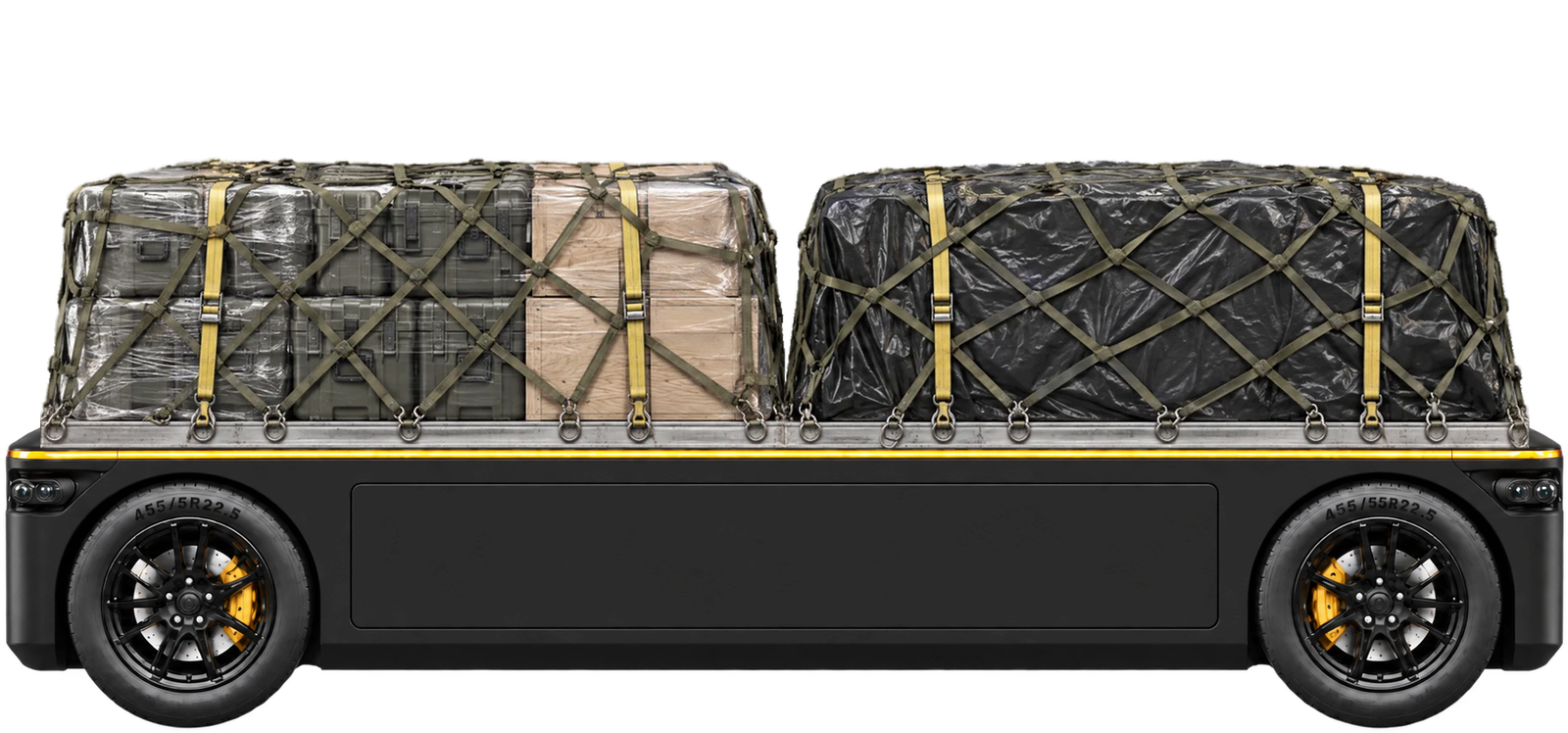
Fuel, electric power and cargo each ride in a Roam Universal Module (RUM) with one exterior and one set of connections. A carrier sets one down at the yard and leaves with the next.
Higher up: rows of aircraft on a floodlit apron, carriers beside them, and a fenced yard of modules on stands.
Aircraft call for service as they land. Roam Control queues the work and sends each carrier with the module the job needs, and a supervisor steps in only when a decision needs a human.
The airfield from above at night: aircraft on a floodlit apron, the runway and its edge lights to the west, the base's lit streets to the east and a bermed fuel farm to the south east.
A module that leaves a depot by rail arrives at a mine or an airfield ready to work, and any carrier on the network can pick it up. Roam's next system is an aircraft built around the same module: it carries modules between sites, flies without one and refuels other defense aircraft in flight.
The American West at night from orbit, with amber routes linking ports, rail yards, depots, mines, farms, a solar field and airfields.
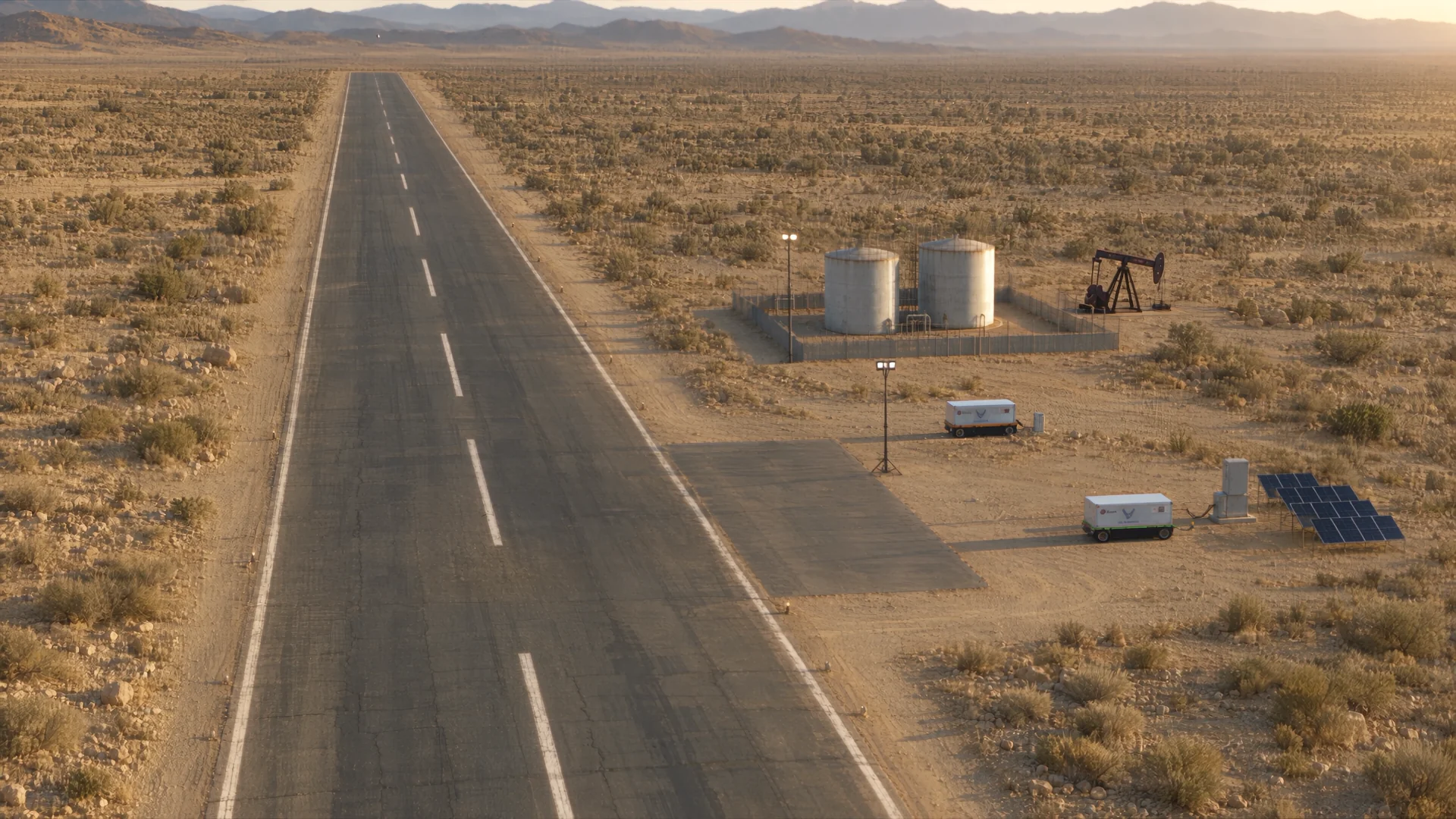
Haul trucks run open pit mines with no driver aboard. Tractors work whole fields on their own. Each one still waits on a person for fuel and repair, and the service has to reach it wherever it works.
Earth from space, the night side over North America, with amber points at ports, mines, farms and airfields.
On the Moon there is no ground crew to call. A lunar base will need the same system that refuels an aircraft with nobody on the apron.
The Moon with a single amber light at its south pole, and Earth small in the distance.
A machine asks once. Only the module, the tool and the skill change.
Service class Energy
Current focus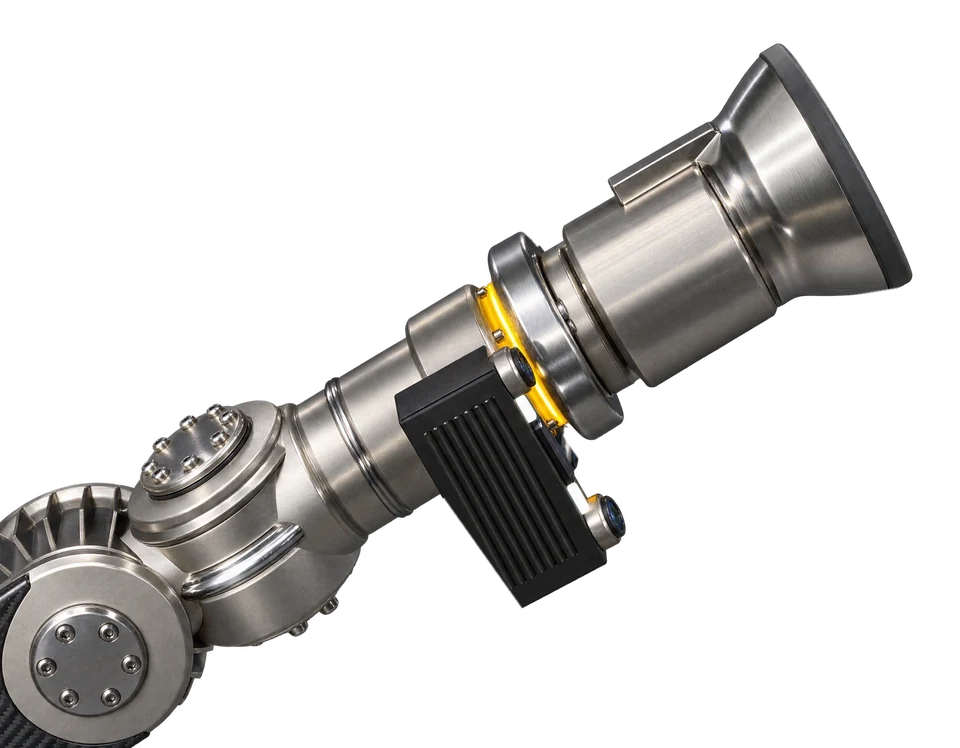
No arm needed, the module stands alone

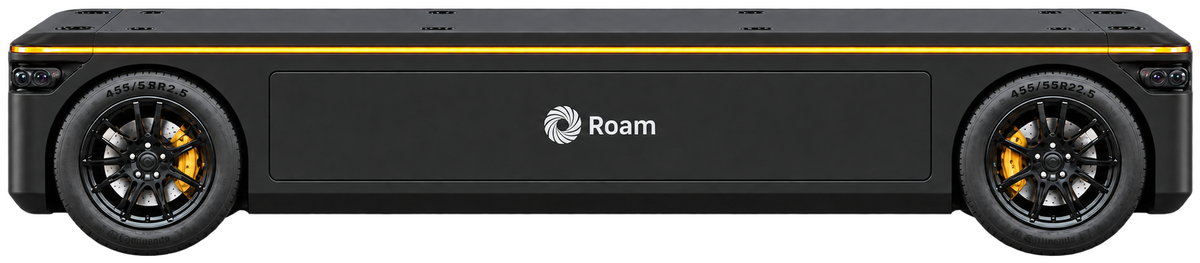
Every machine here calls the same Roam Control and one carrier design.
Refueling comes first. The arm has to seat a pressure coupling on the aircraft and move fuel without a spill. Then the aircraft is back in the air in minutes.
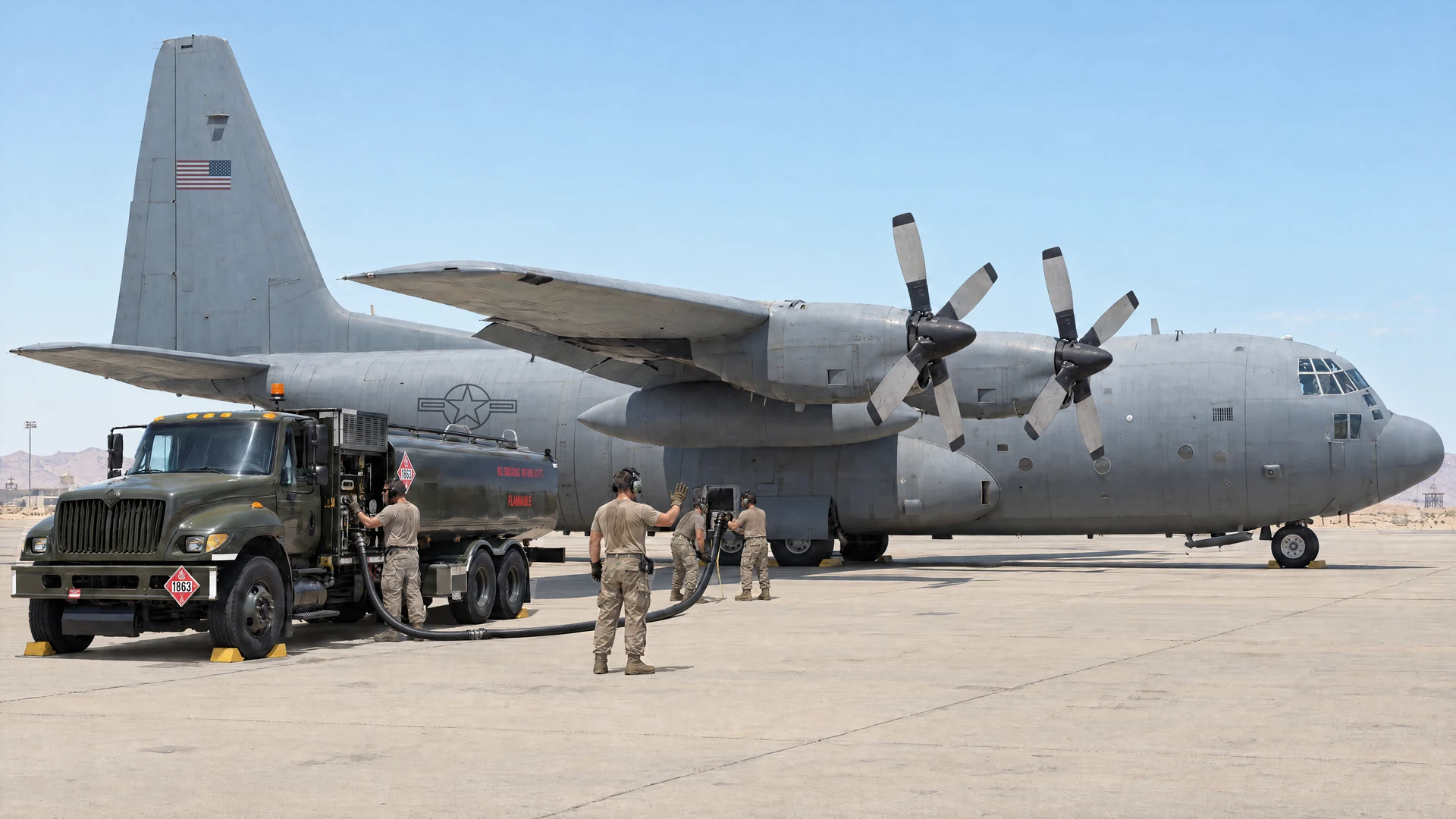
Refueling a military aircraft takes a crew of four, dragging heavy hose beside it in 115°F heat. Deployed crews do it in danger zones. Roam brings the fuel and makes the connection. People stay in command, away from the hose.
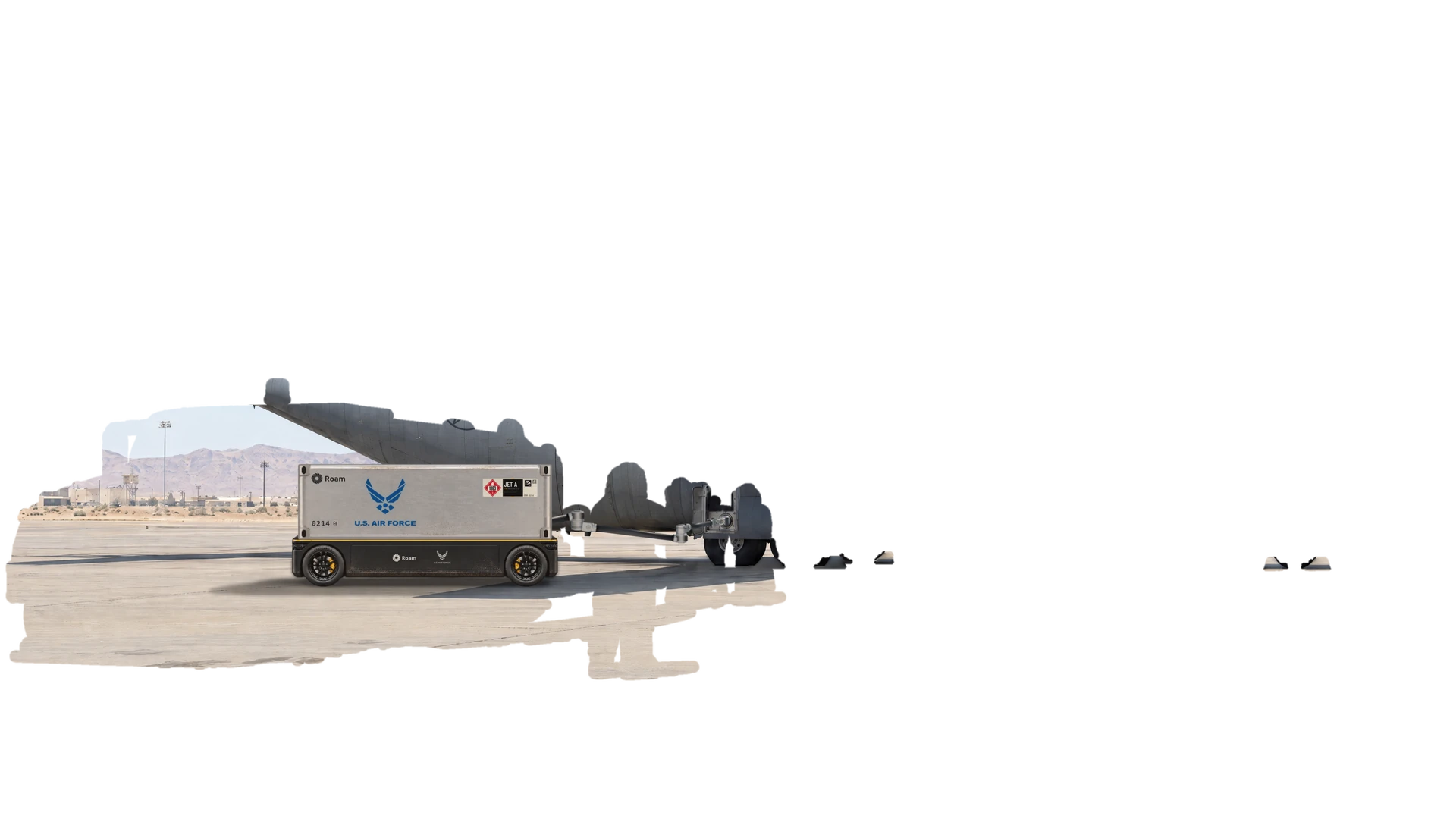
Move the pointer across the image without clicking, swipe horizontally on a touch screen, or use the left and right arrow keys. The crewed scene shows four crew members and a conventional fuel truck servicing a C-130 in desert heat. The Roam scene shows the same aircraft served by a Roam carrier and robotic arm, with no one beside the aircraft. The aircraft and camera stay fixed.
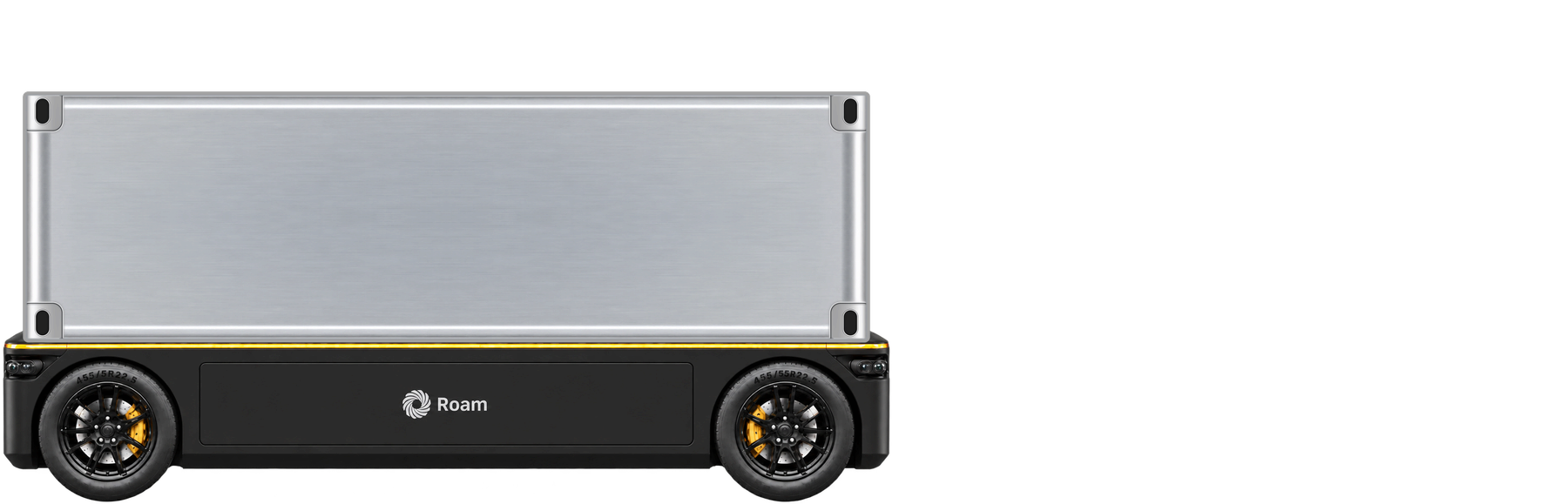
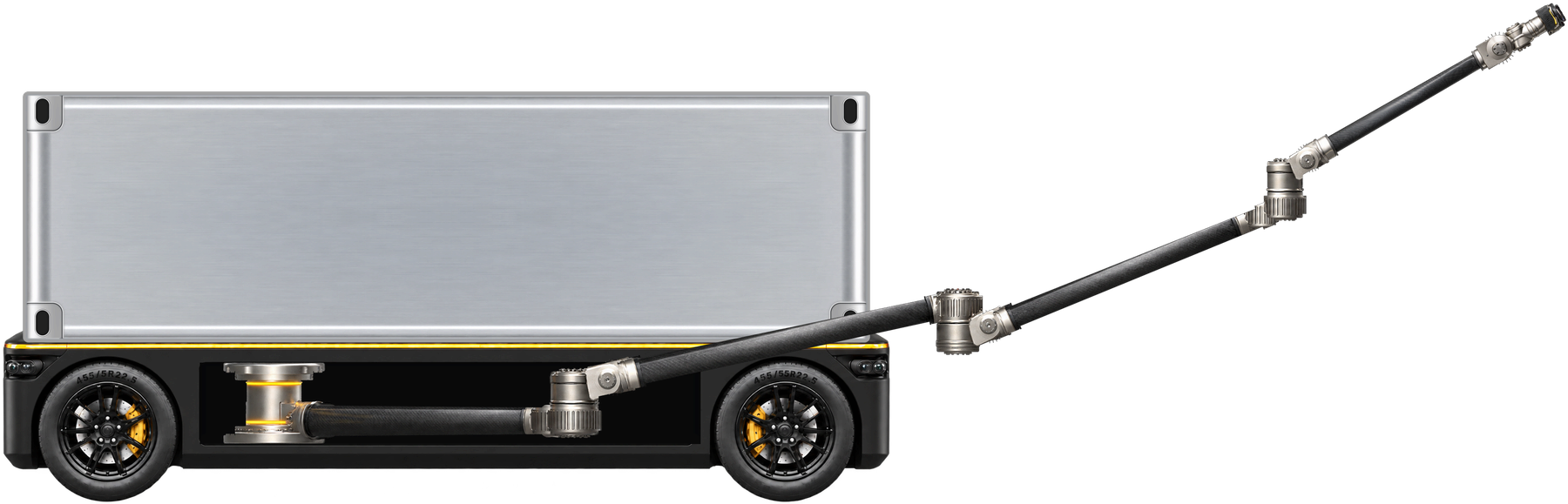
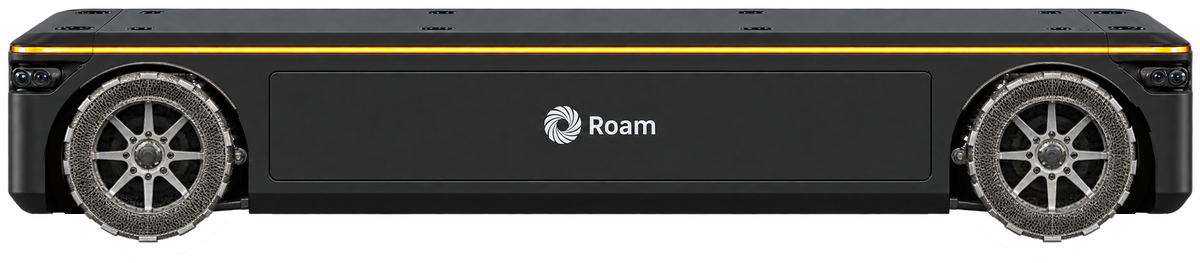
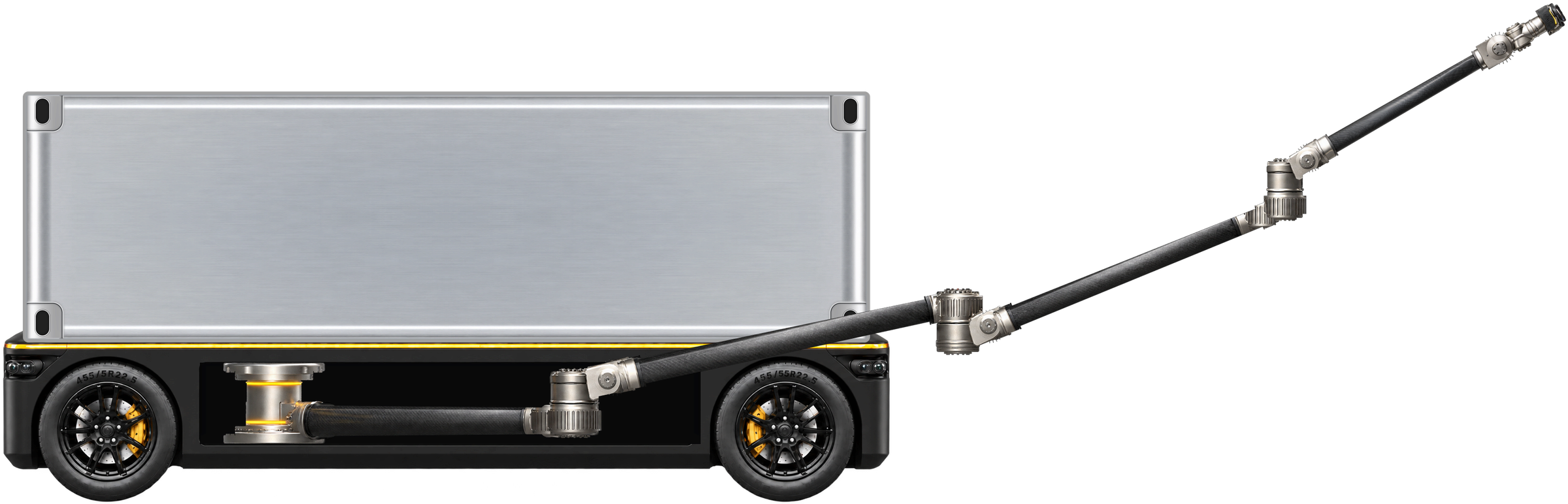
The carrier drives the module to the machine and the arm reaches out from the bay in its side. It has a bay on each side and a charge port at each end.
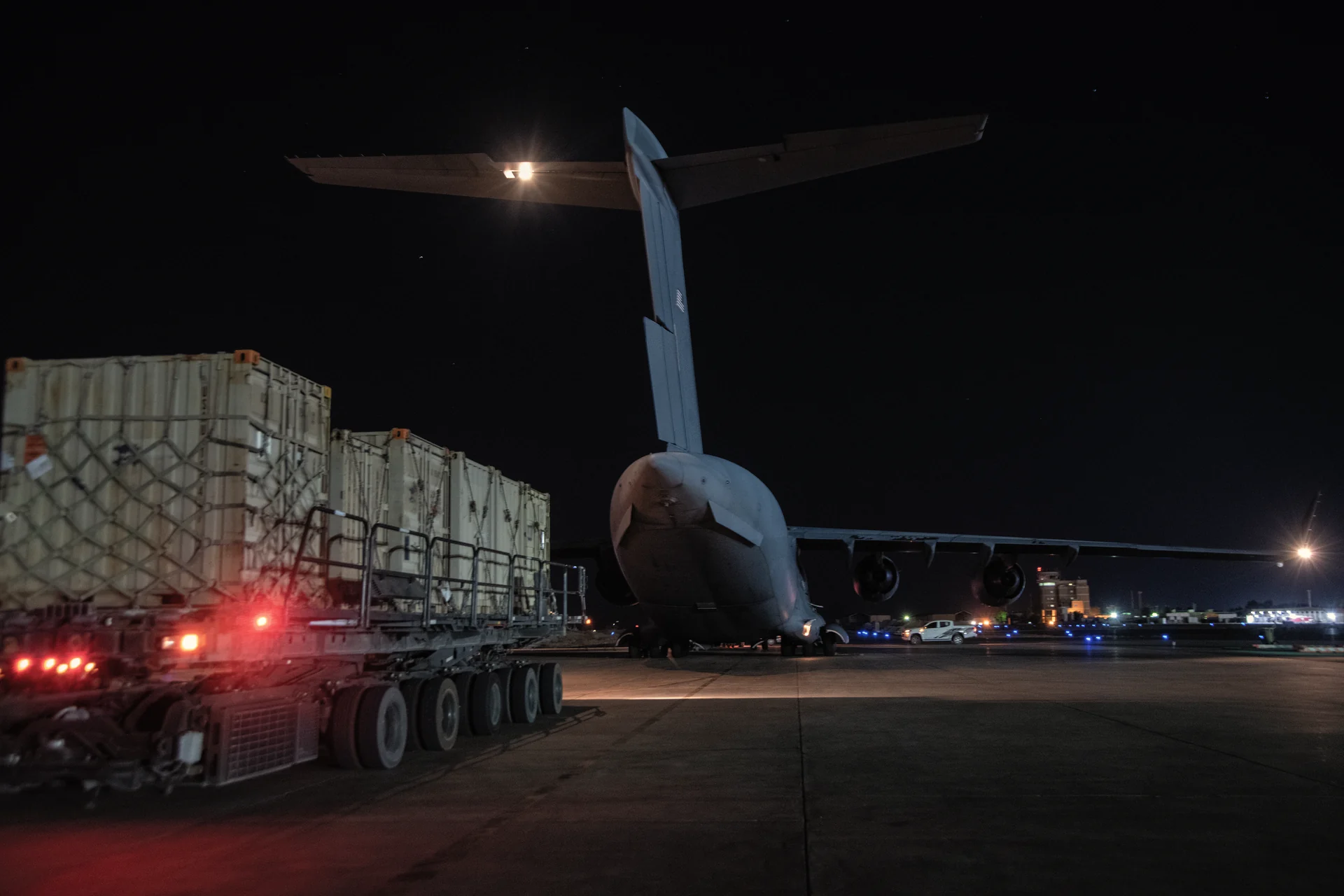
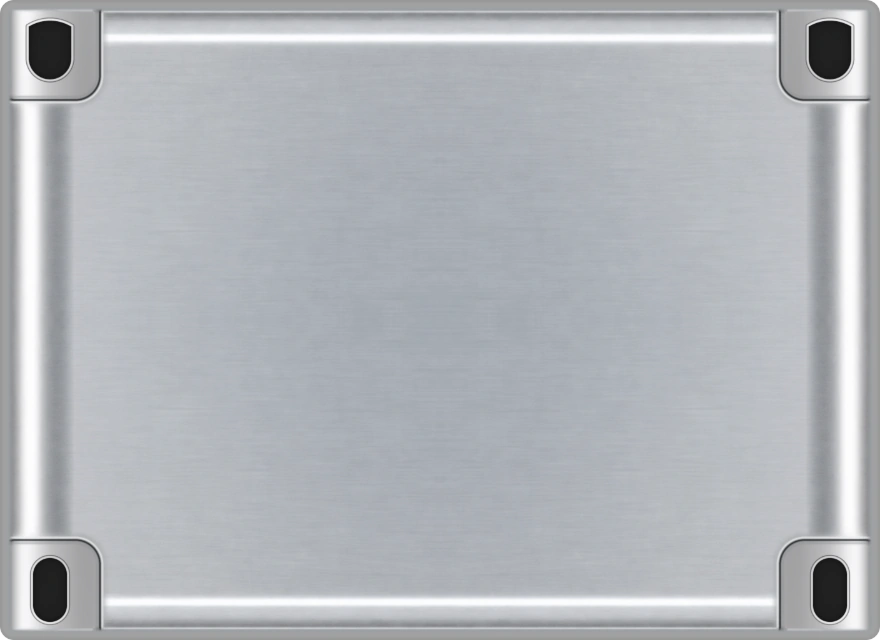
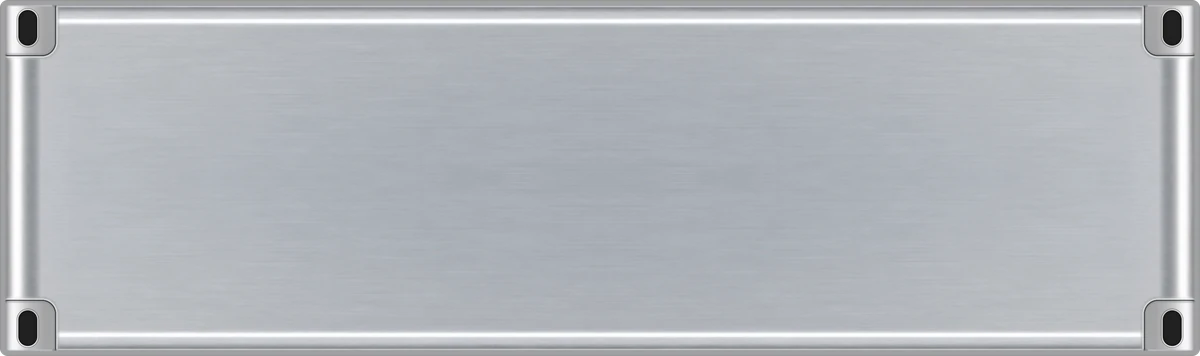
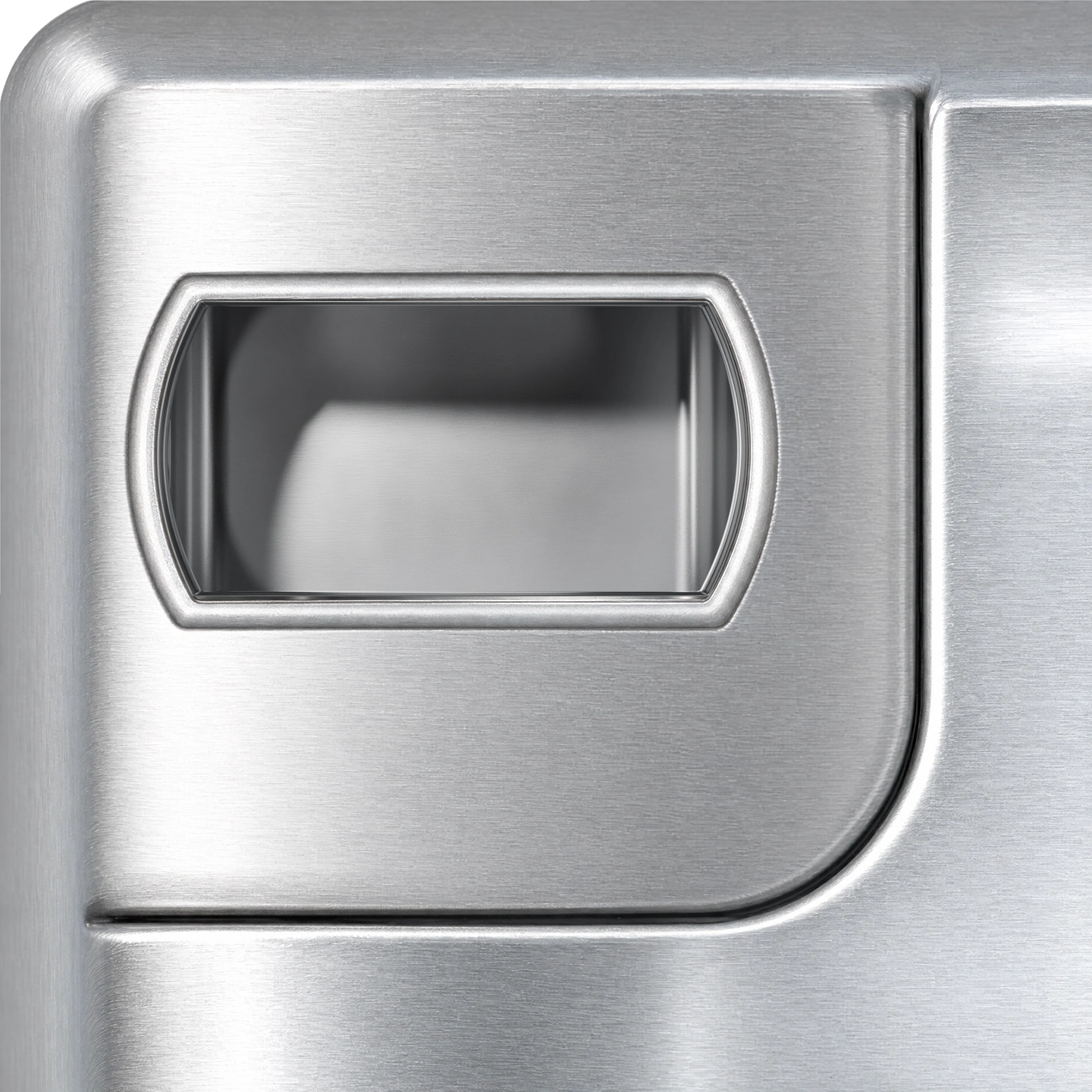
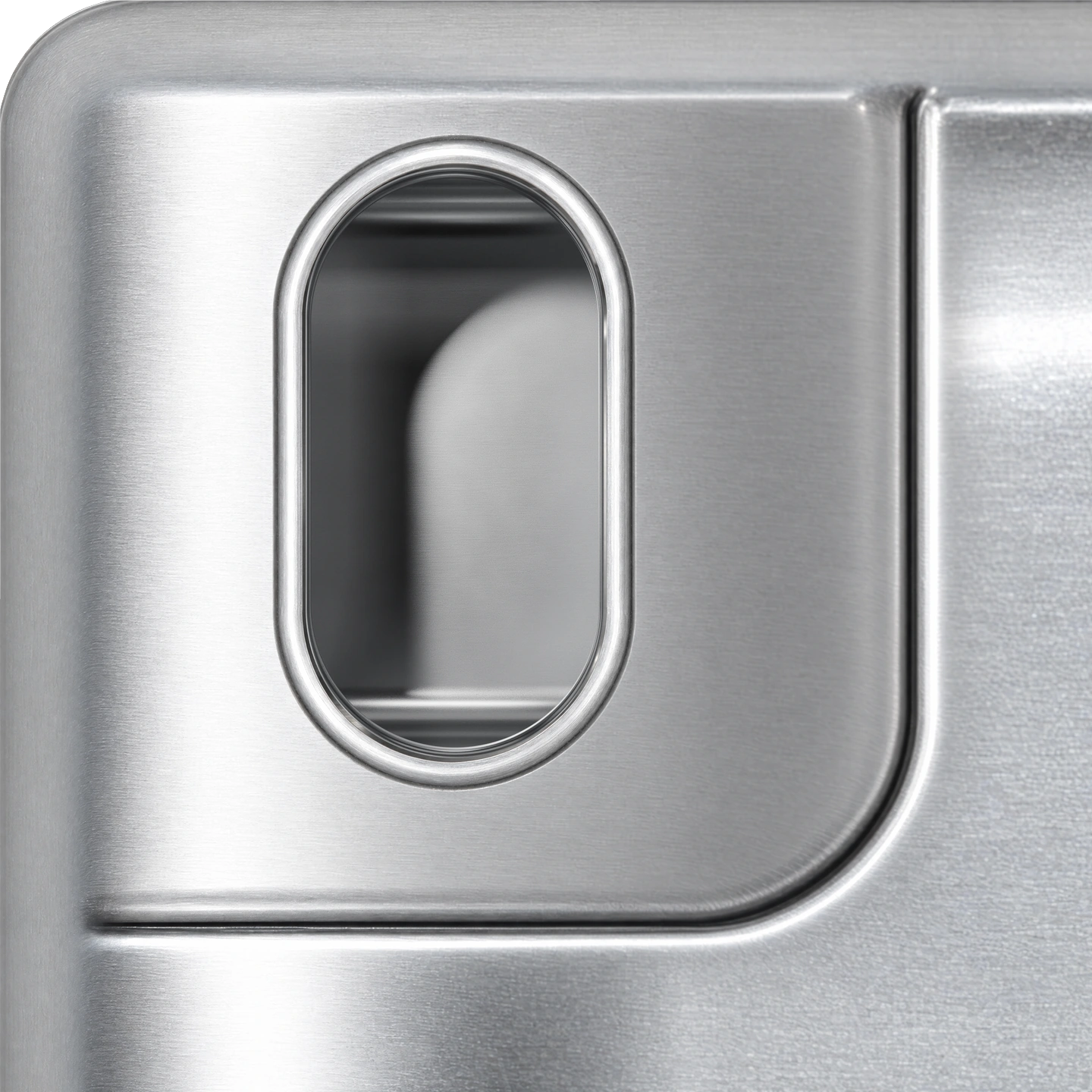
The footprint matches two 463L air cargo pallets placed end to end. Every corner is an ISO 1161 pattern casting, the fitting freight containers use.
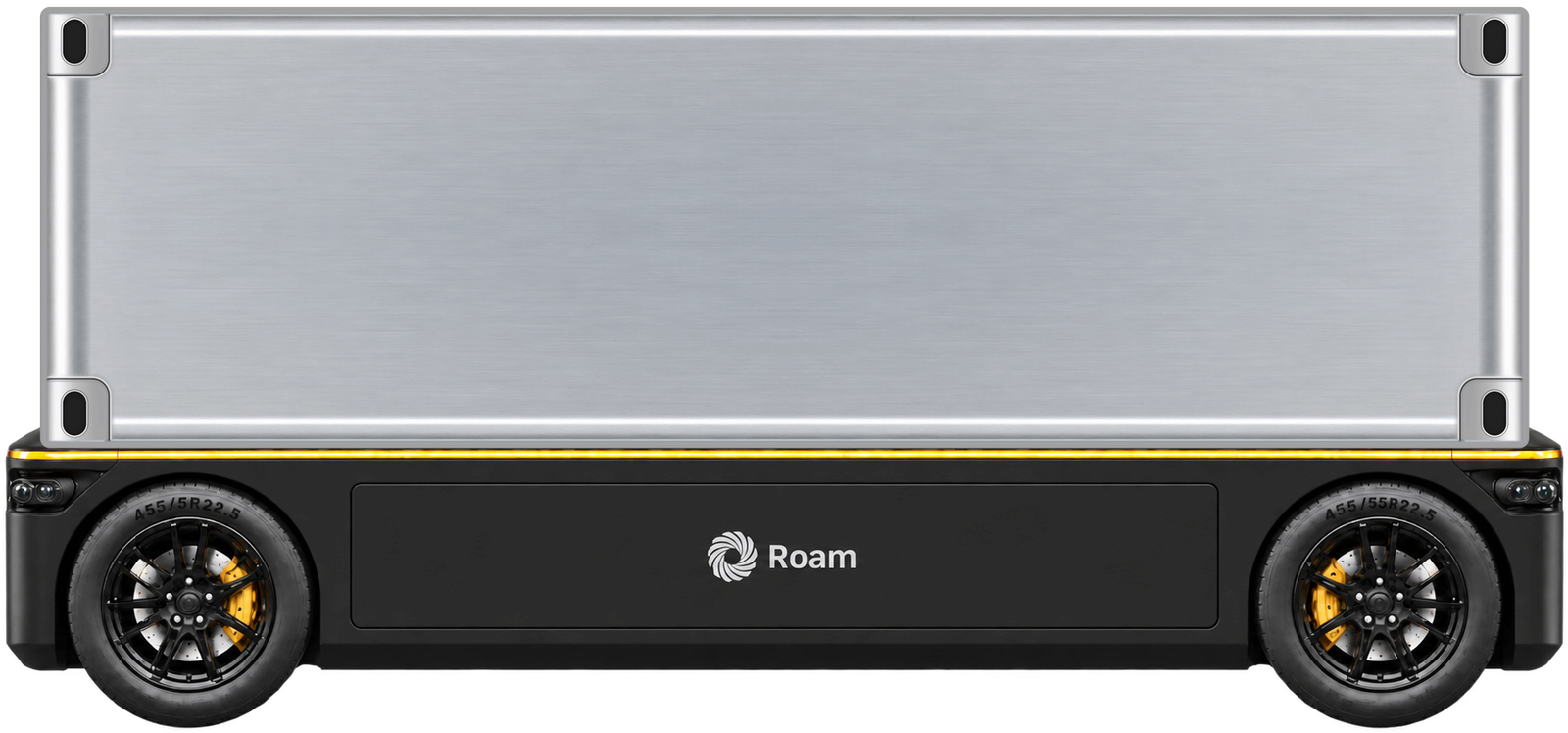
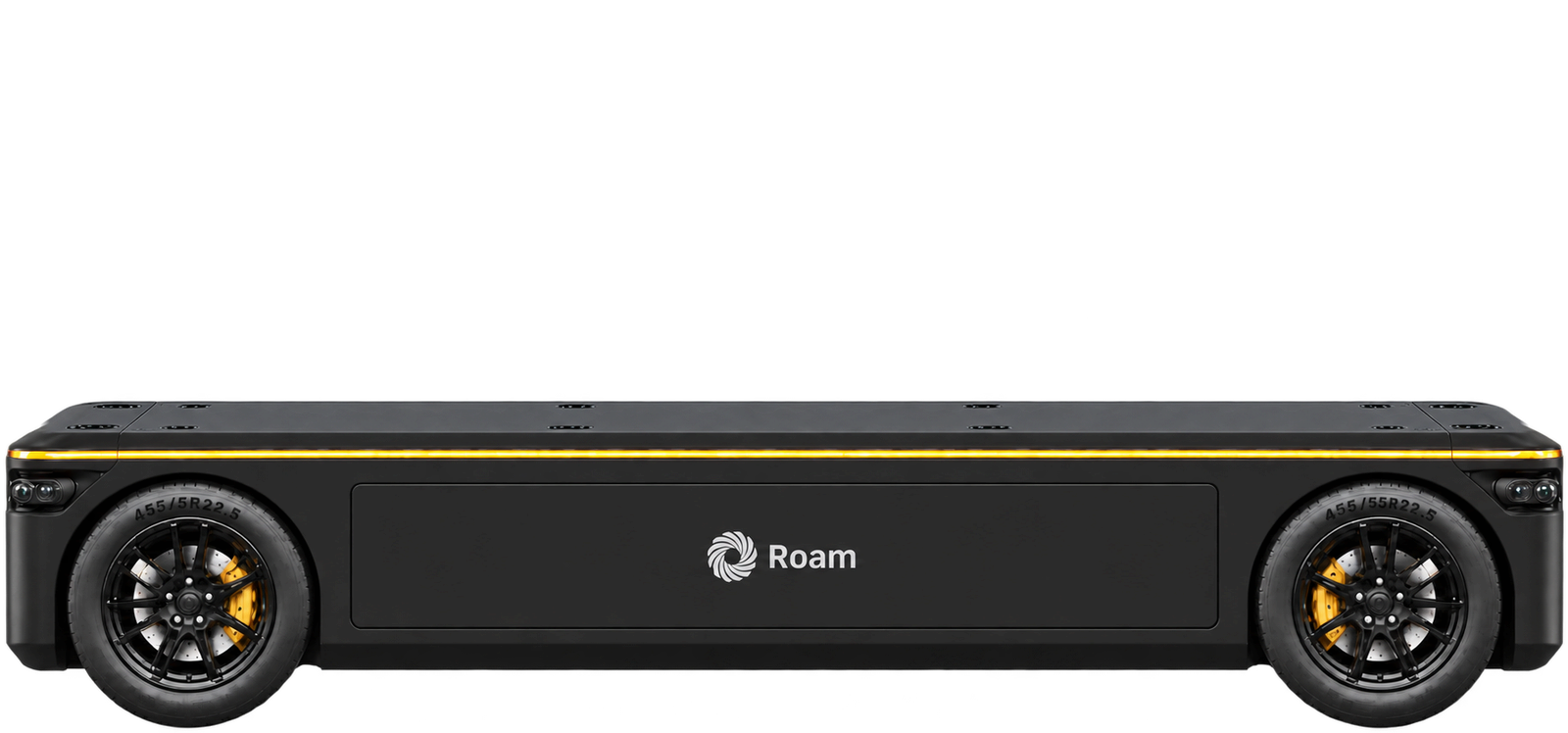
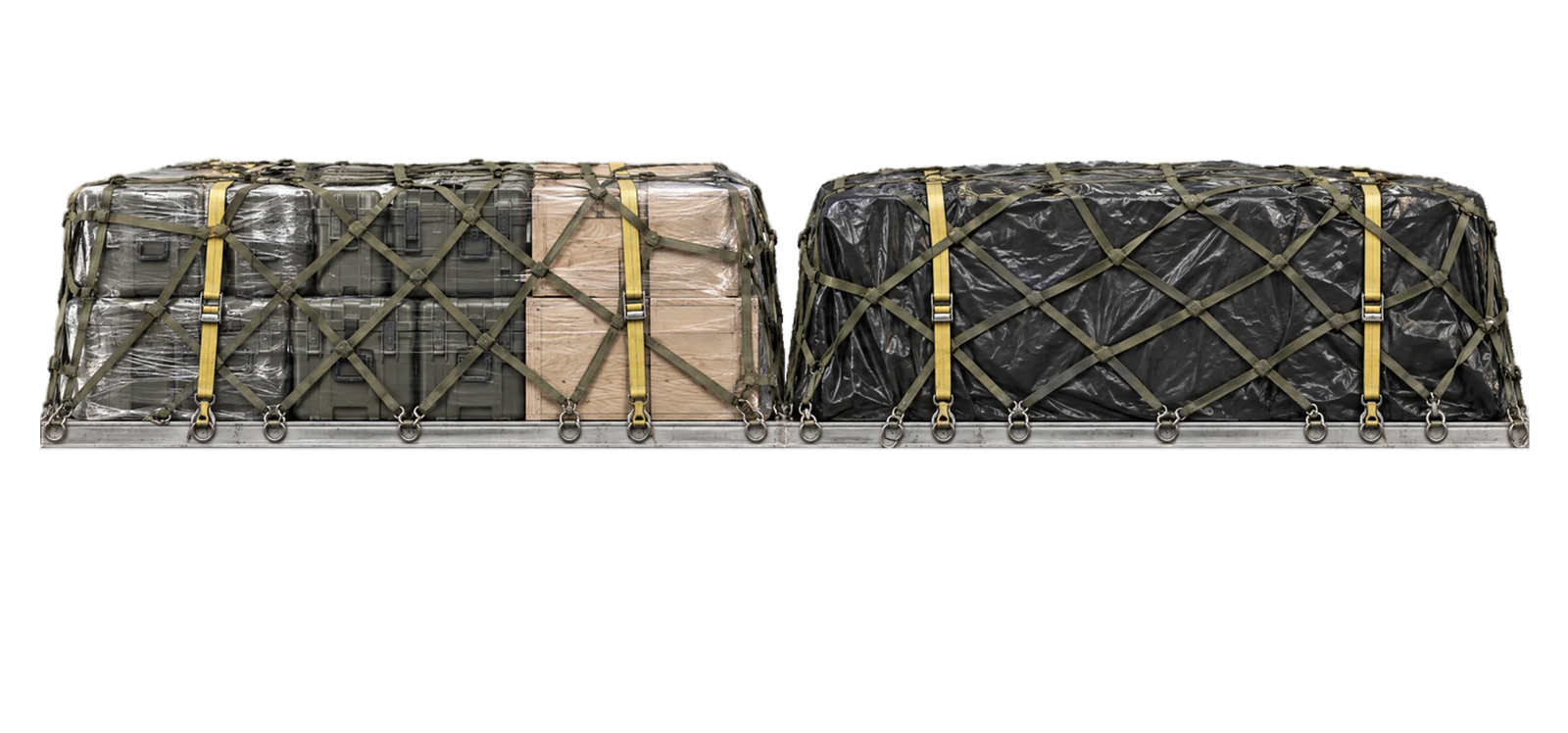
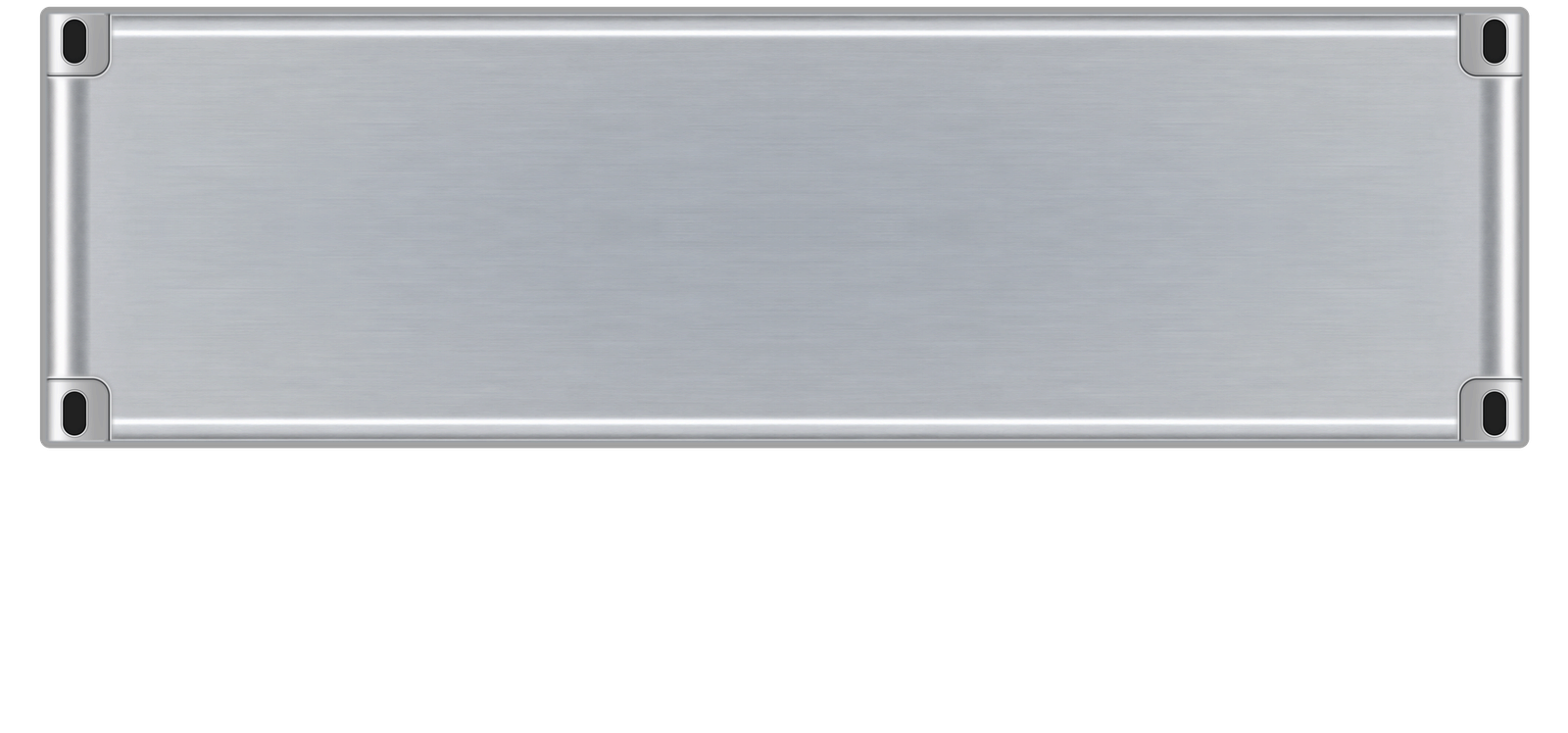
RUMRoam Universal Module
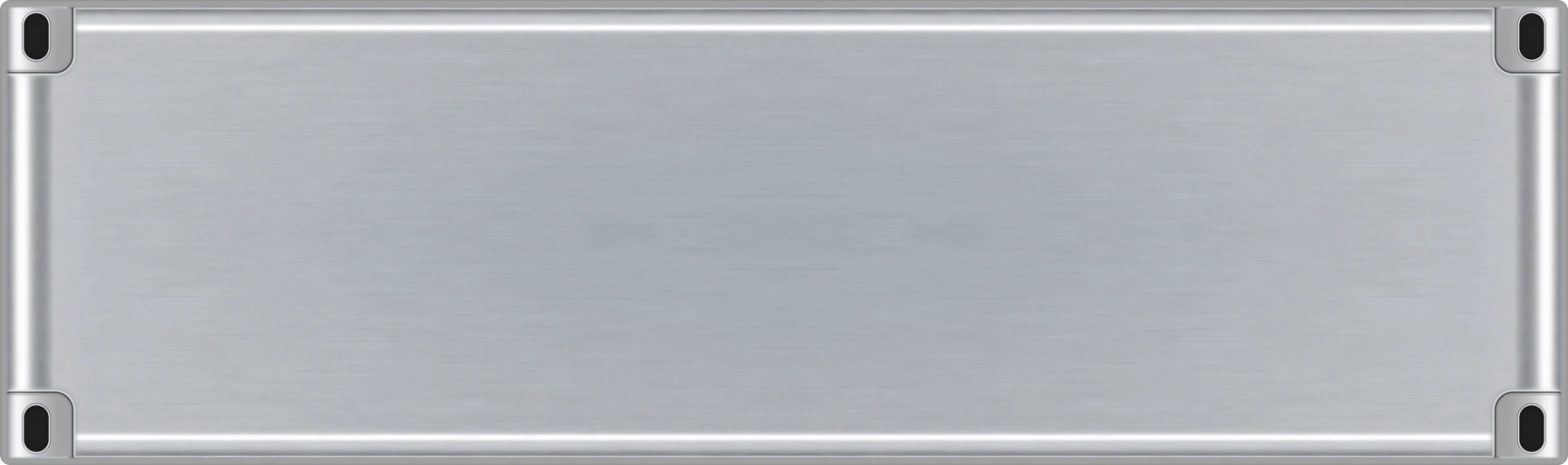
Hollow ISO 1161 pattern castings take a crane hook, a twistlock or a lashing from outside the module.
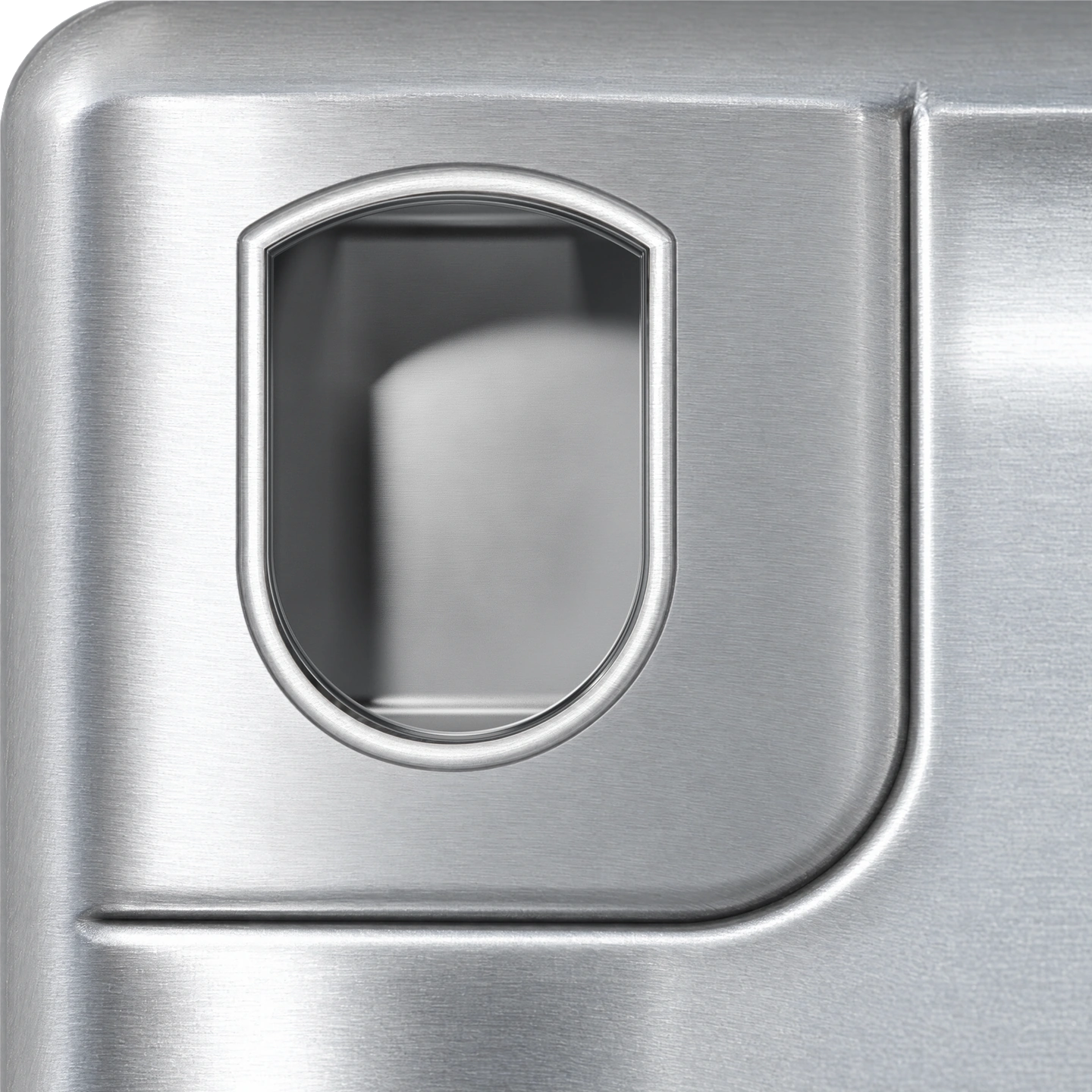
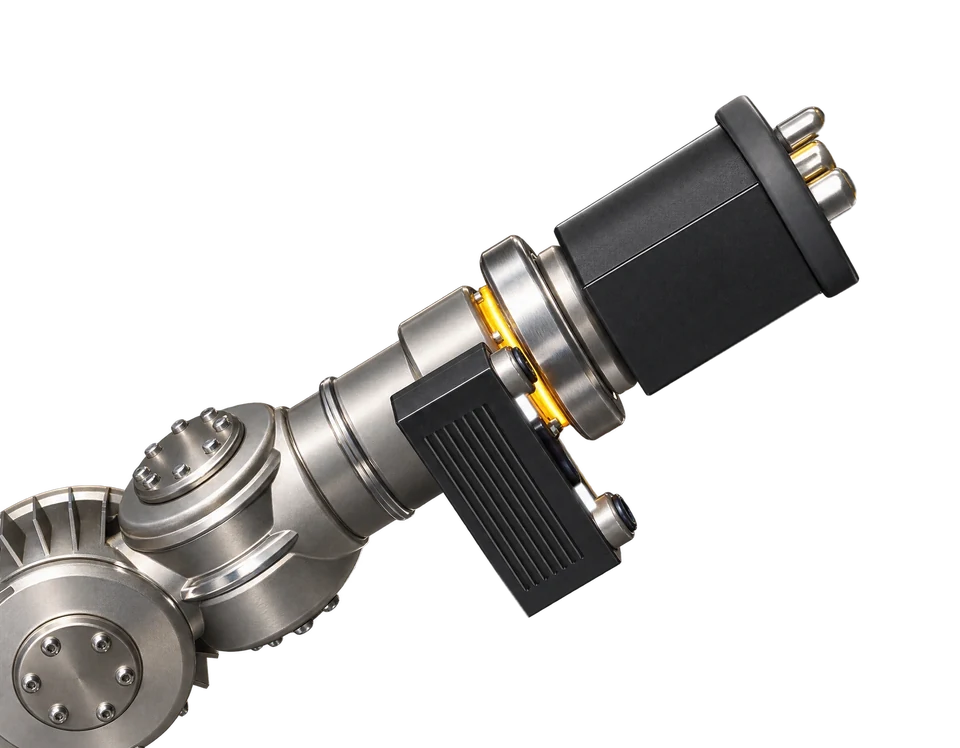
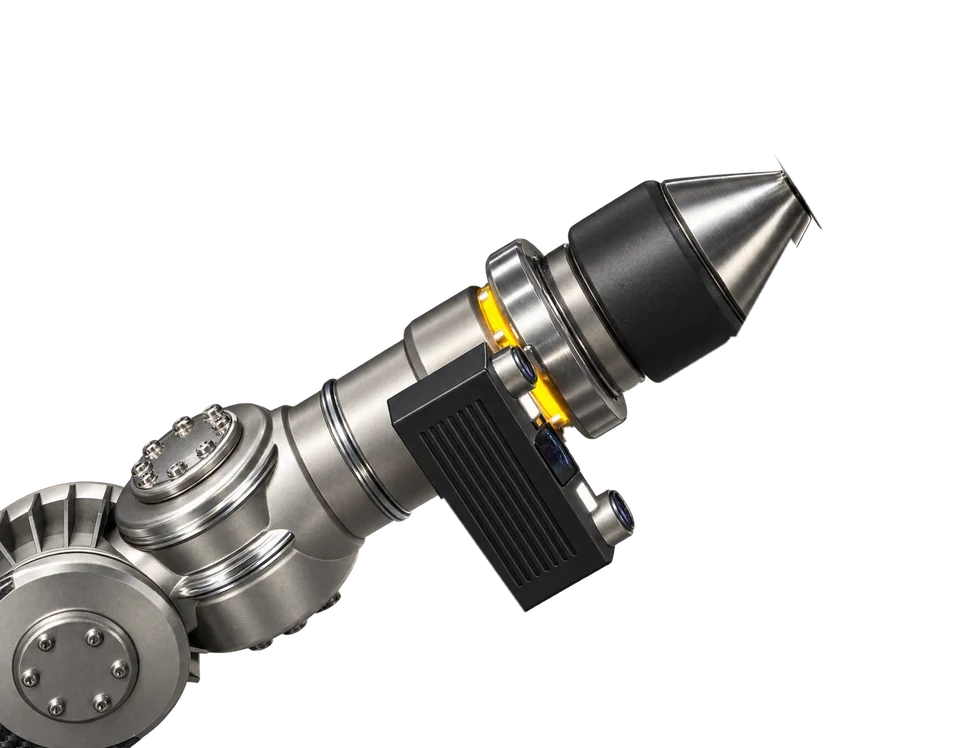
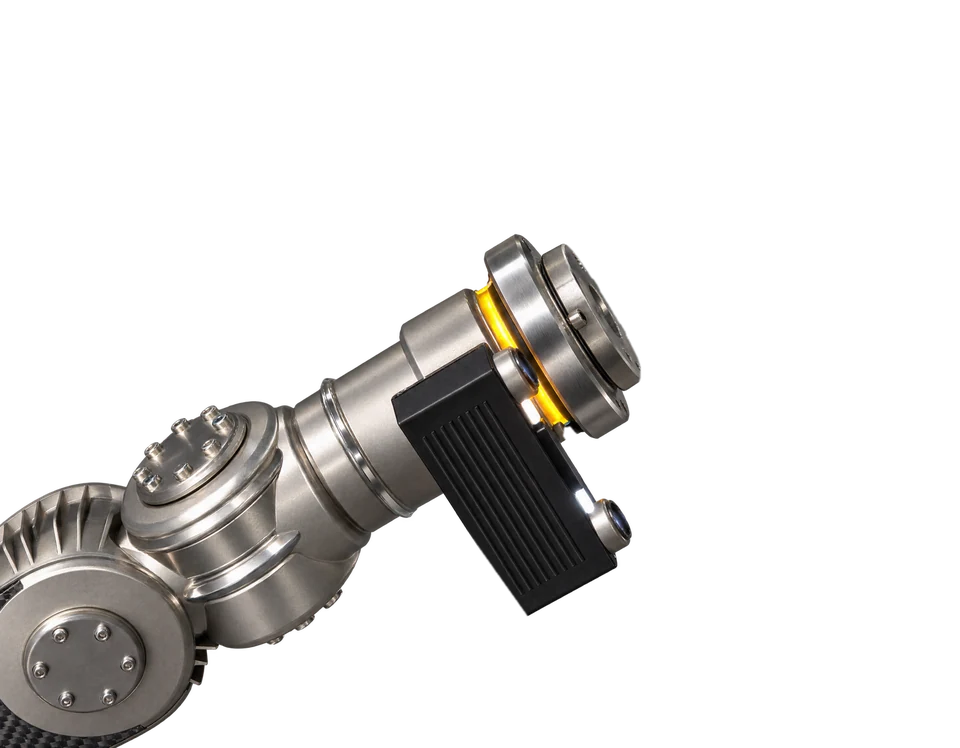
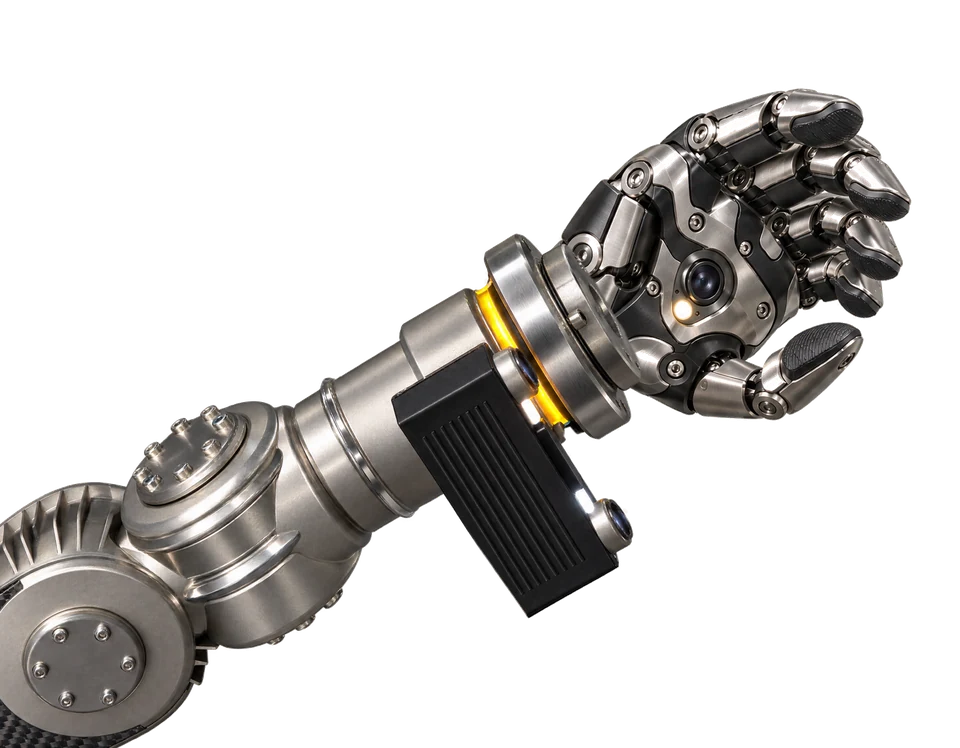
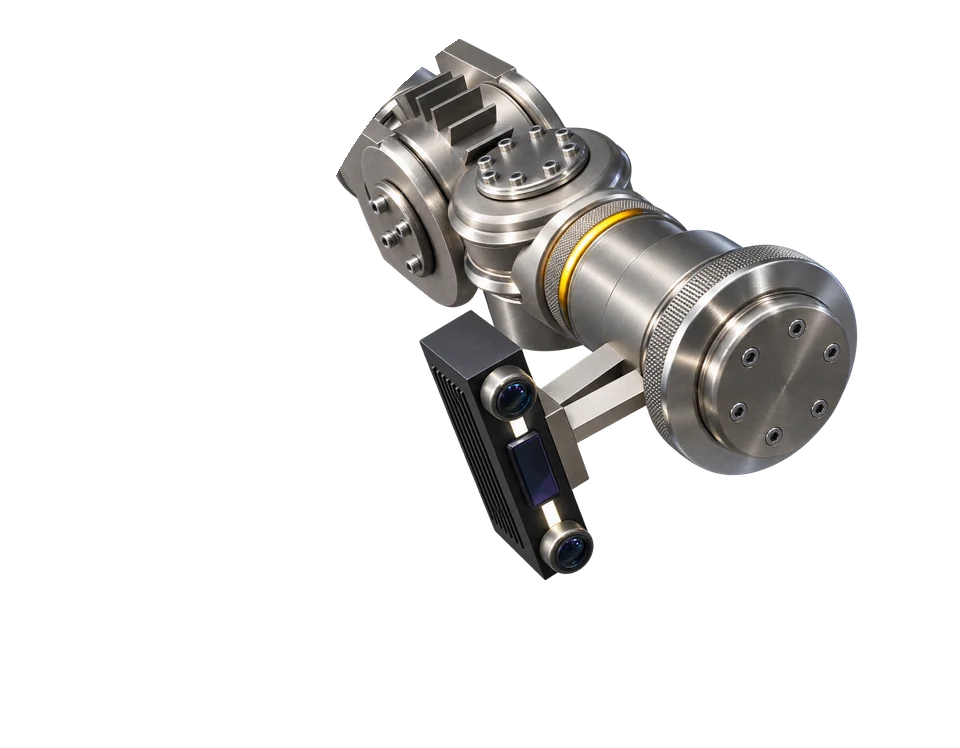
Eleven axes in five assemblies on four rigid carbon links. The wrist carries its own perception and changes tools on a locking ring. If a coupling will not seat or someone walks into the safety zone, the arm stops safely and reports what happened.
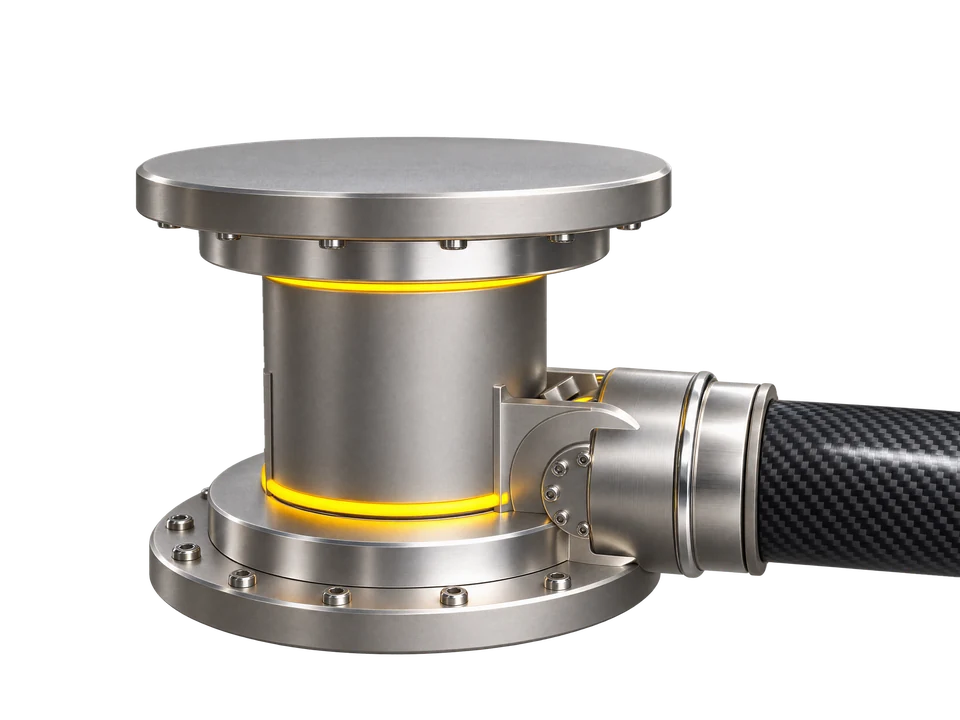
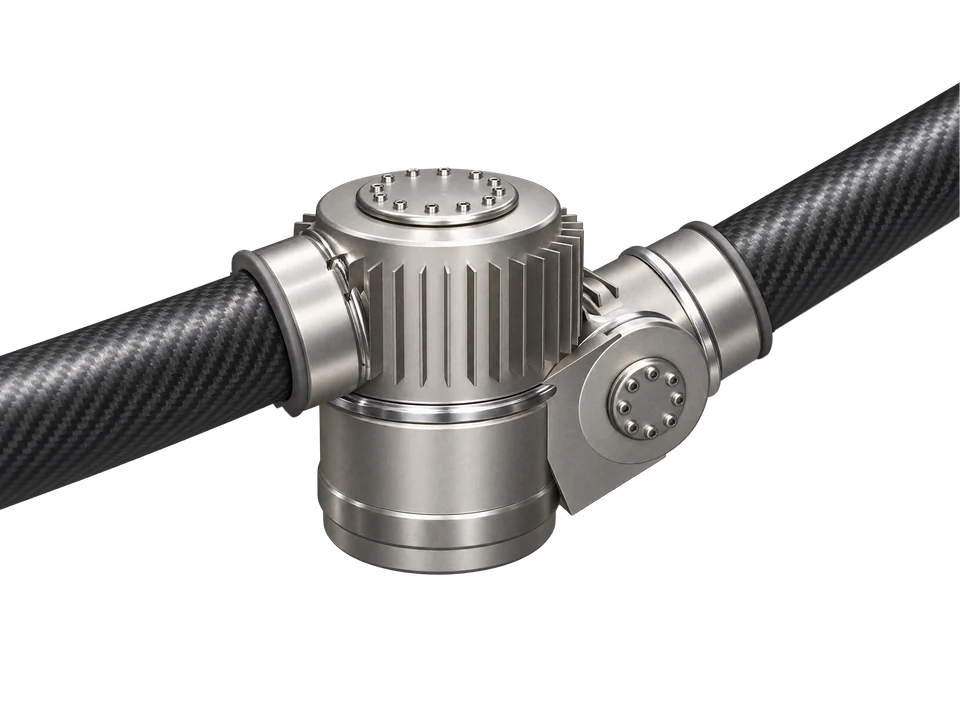
U.S. Air Force and U.S. Navy configurations share one set of hardware, so a dispersed airfield gets fuel, power and cargo without a ground crew stationed there. Airlines and general aviation come next.
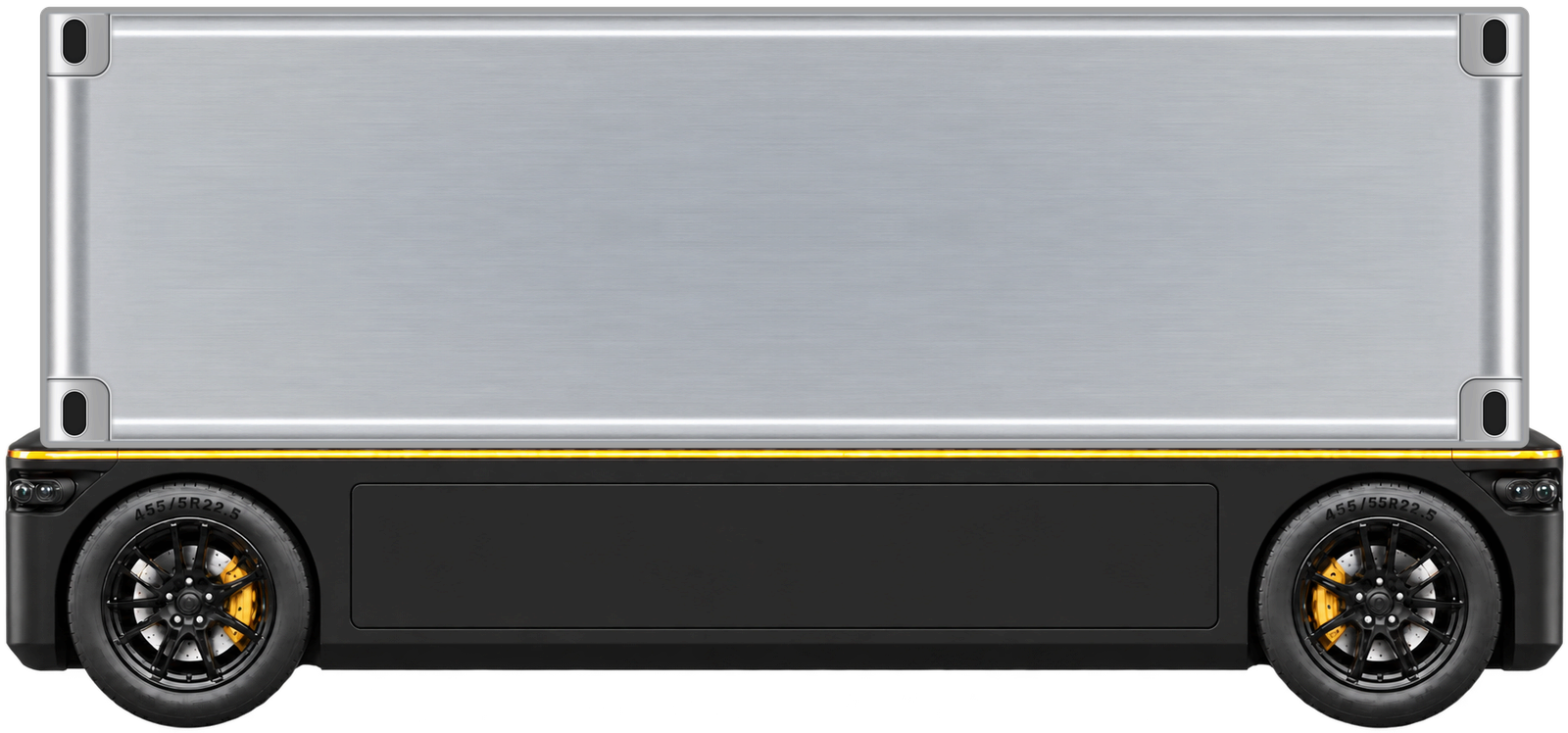
RUM also supports liquid oxygen, ground service, spare parts, ground fuel, potable water, robot service, field workshop, fleet recovery, airfield restoration, communications and computing, power and thermal support, medical cold chain, fuel quality, fire response, aircraft deicing, service fluids, refrigerated supplies, utility water, decontamination, reverse logistics, expeditionary engineering, shore transfer, controlled inventory, sensing and weather, disaster response, packaged munitions and counter UAS support.




Each horizon takes the same Roam Universal Module farther from the nearest ground crew.
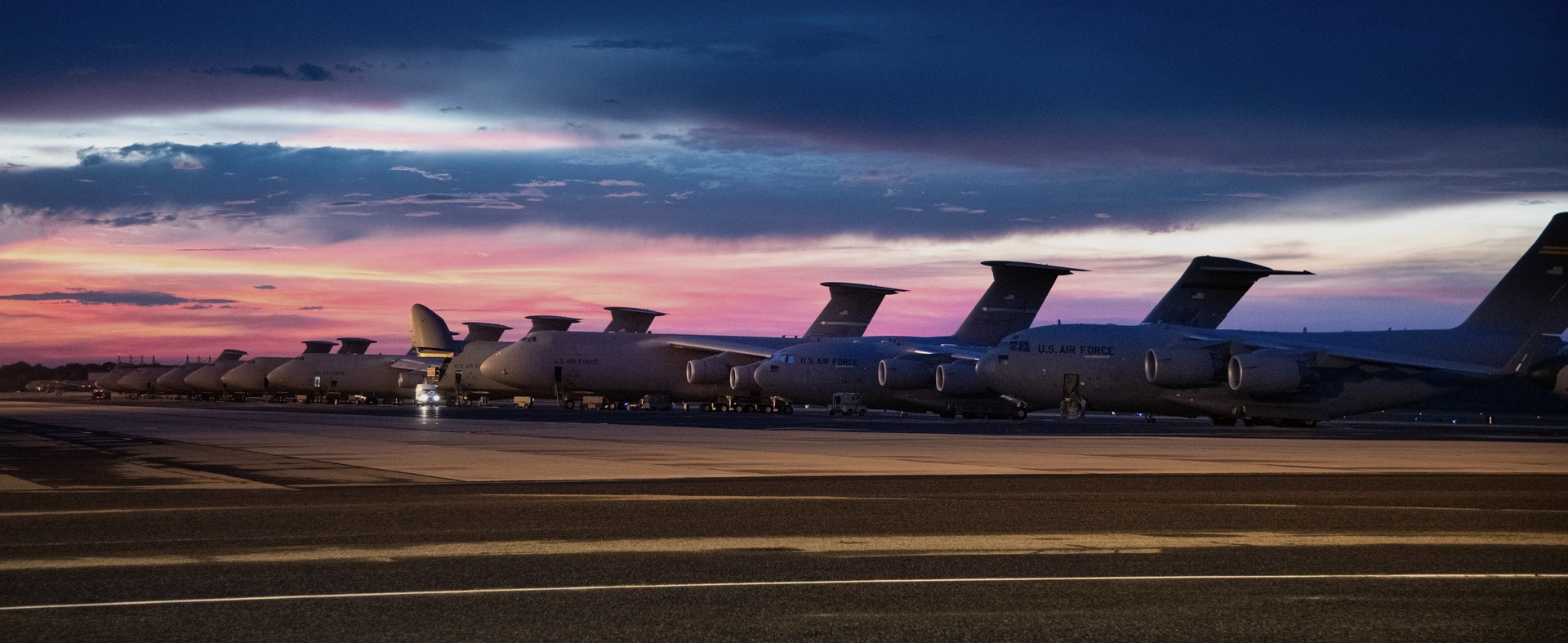
Configured for U.S. Air Force and U.S. Navy flight lines: aviation fuel, electric power and cargo.
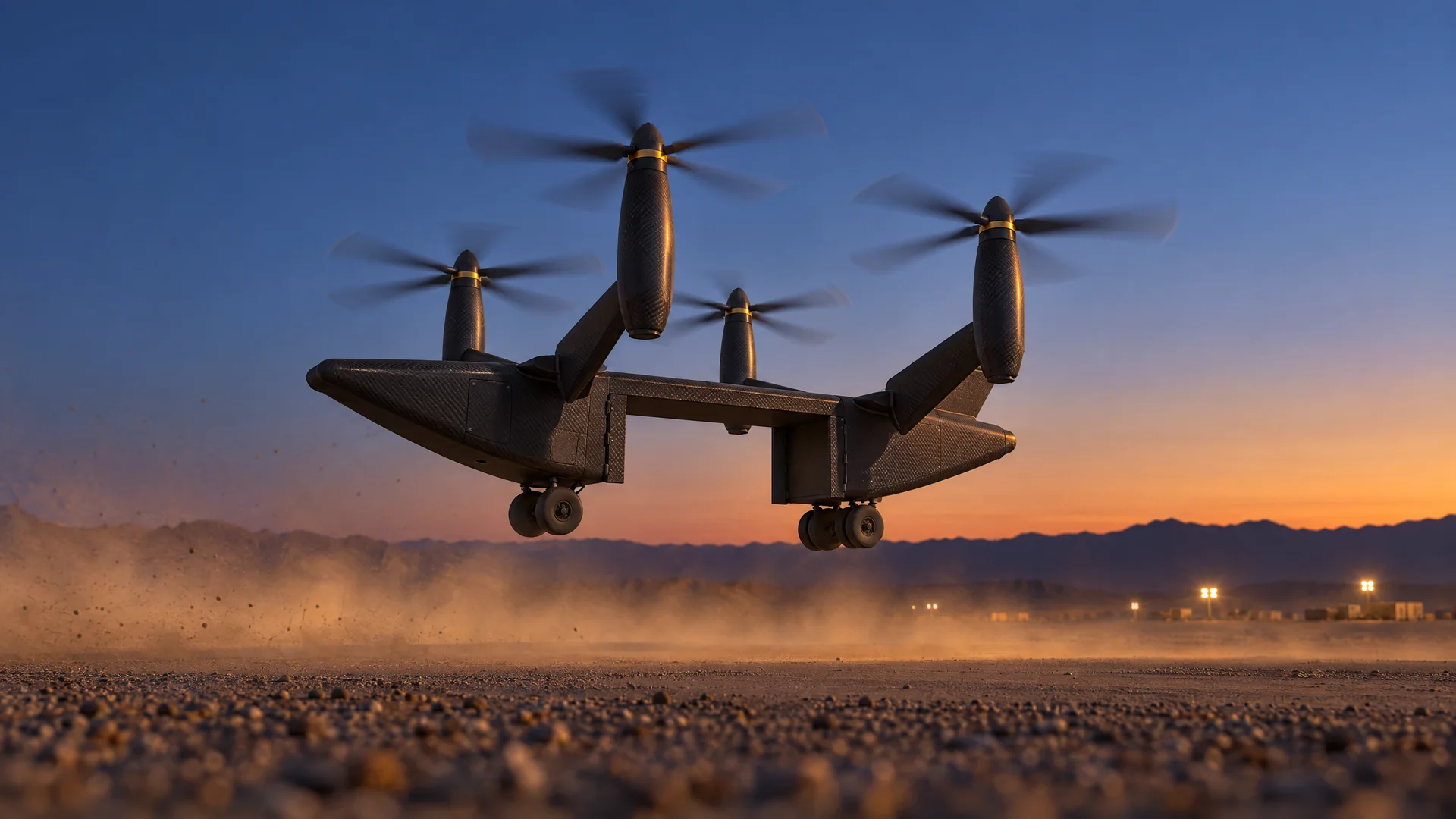
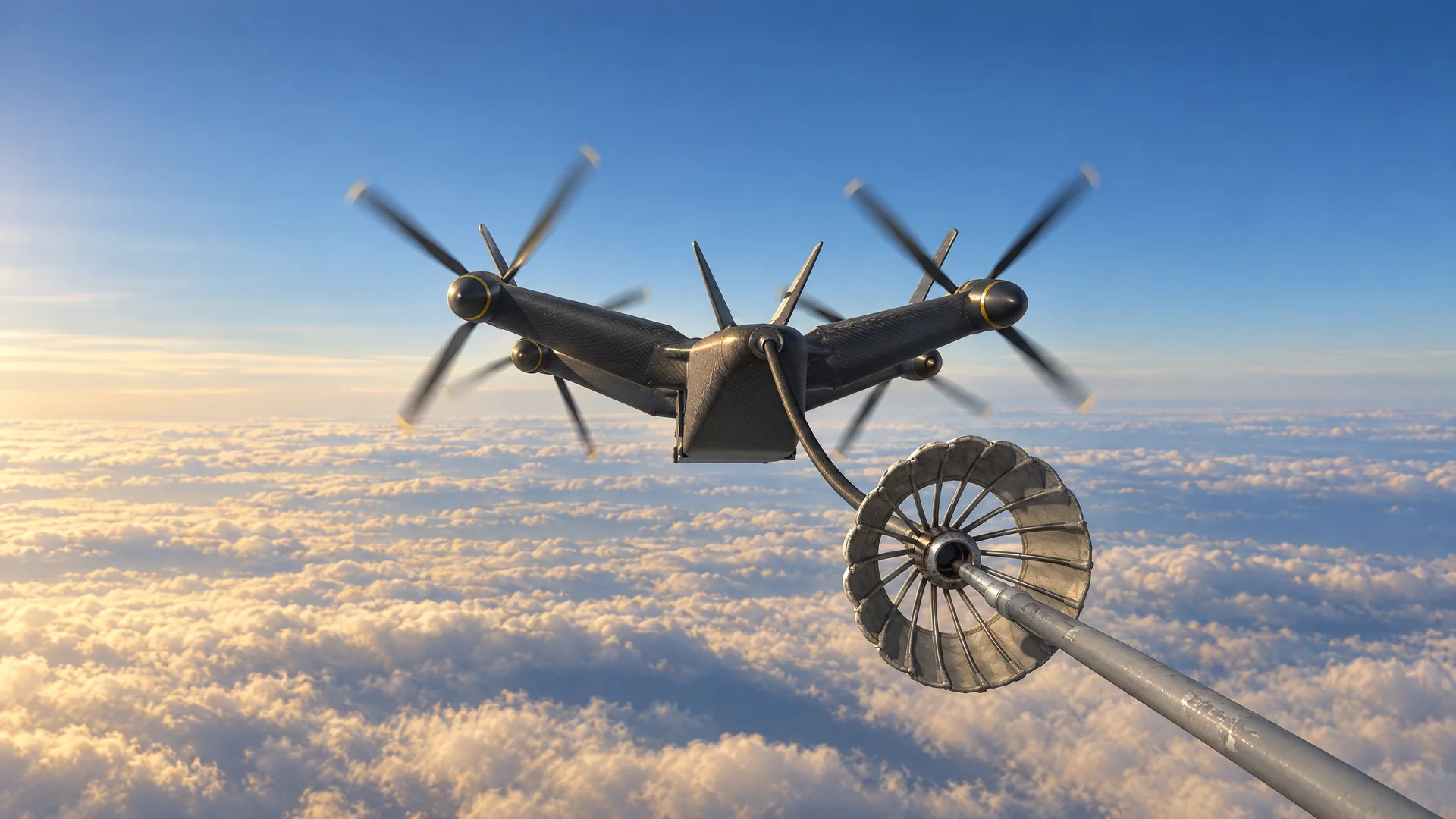
An aircraft built around the Roam Universal Module that carries modules between sites, flies without one and refuels other defense aircraft in flight.
The same system for a base at the lunar south pole.